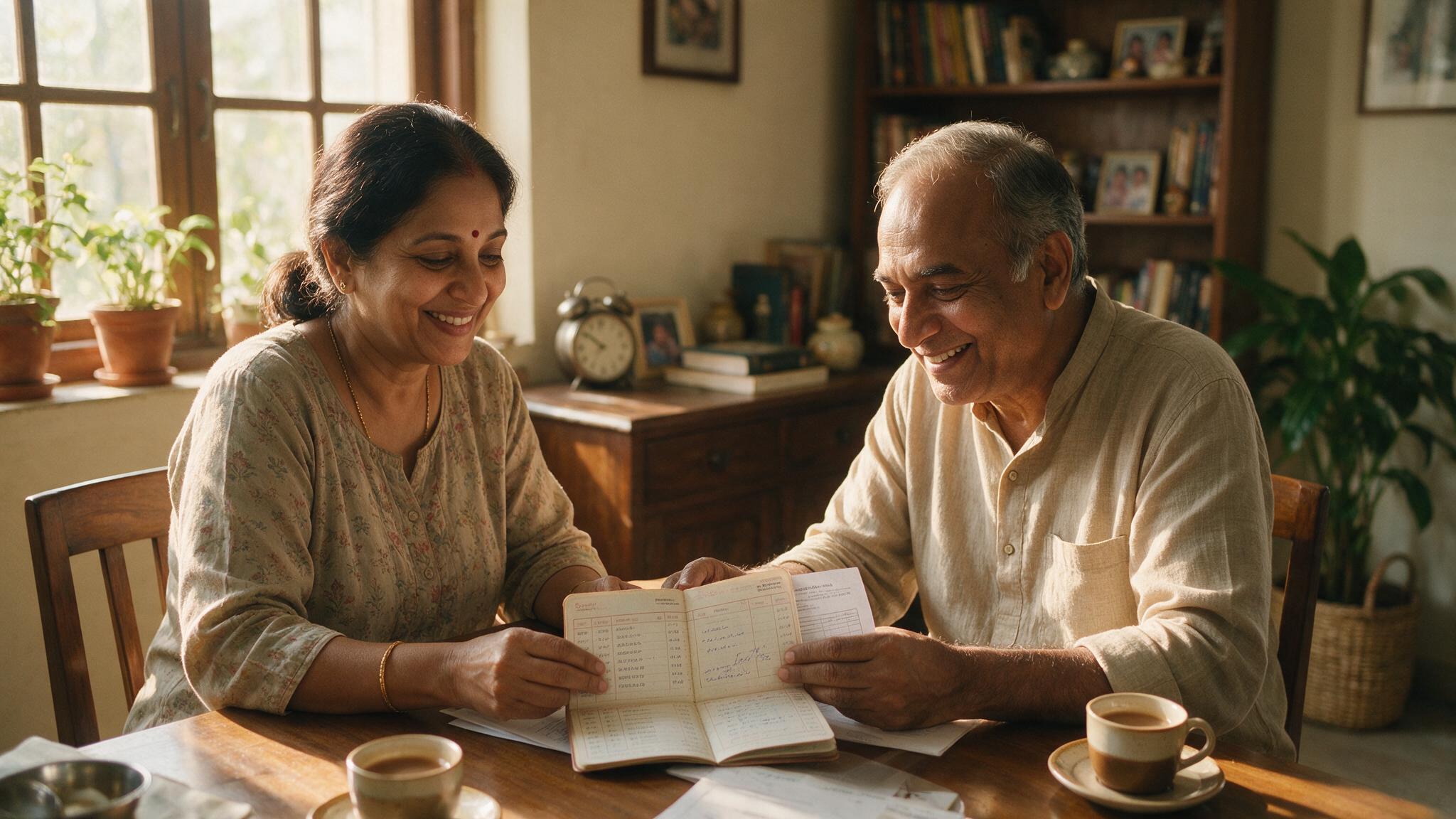

Money shapes nearly every decision an Indian family makes: where you live, what school your children attend, whose wedding gets a bigger budget, who inherits what. And yet, in most Indian households, money is the one subject nobody actually talks about.
Ask anyone what their family discusses at the dinner table, and you’ll likely hear food, marriage prospects, exam results, or politics. Rarely will you hear “how much we earn” or “how we budget our expenses.” This isn’t an accident. It’s a pattern passed down through generations, and according to finance expert Gaurang Sanghvi (@askthatfinanceguy), it’s a pattern that needs to break.
Why Money Became a Taboo Topic in Indian Households
The silence around money in Indian families isn’t random. It’s rooted in tradition, hierarchy, and a fair amount of superstition.
In many households, the grandfather was historically the financial decision-maker, the figure who built and protected the family’s wealth. The grandmother, meanwhile, held the family together structurally and emotionally, often without direct involvement in financial decisions. This division of roles meant money conversations rarely crossed generational lines; they stayed within a small, often male-dominated circle.
Layer onto this a cultural discomfort with discussing wealth openly, partly superstition, partly social optics, and you get a household where money is felt everywhere but spoken about nowhere.
The Role of Family Structure
Traditional Indian joint family systems reinforced this silence. With multiple generations under one roof, financial responsibility was distributed and somewhat invisible to children; someone else always seemed to be handling it. Children grew up surrounded by financial decisions they never directly witnessed or participated in.
Not Every Indian Family Stayed Silent
Interestingly, this taboo isn’t universal across all Indian communities. In Gujarati households, for example, money is often one of the most openly discussed topics, sometimes the only one. Growing up Gujarati, conversations about saving, spending, and financial planning are woven into daily life from childhood.
This contrast matters. It shows the silence around money isn’t an inherent Indian trait. It’s a learned, regional, and generational behavior. And if it can be learned, it can also be unlearned.
What This Silence Costs the Next Generation
When families avoid money conversations, children don’t grow up financially neutral. They grow up financially uninformed, often picking up money habits from unreliable sources instead.
The risks compound over time:
- Children miss foundational money skills: budgeting, saving, understanding interest, banking basics
- Financial myths fill the silence: vague beliefs about saving, investing, or spending take root without correction
- Unreliable sources fill the gap: social media and random internet content become a child’s primary financial educator
- Family wisdom gets lost: practical lessons that worked for grandparents and parents never reach the next generation
As Gaurang Sanghvi puts it: if you don’t have these conversations, “some internet person is going to talk to them and put random and wrong ideas in their head.”
How to Start Talking About Money With Your Children (Practically)
Breaking a generational taboo doesn’t require a dramatic sit-down lecture. It requires small, consistent, hands-on moments.
| Practical Step | Why It Works |
|---|---|
| Take your child to a bank or post office | Makes money tangible rather than abstract |
| Show them a checkbook, let them write one | Builds real-world financial literacy through action |
| Let them make (and fix) small mistakes | Mistakes teach accountability; a wrong checkbook entry meant a real trip back to the bank |
| Talk openly about saving and budgeting | Normalizes money as a subject, not a secret |
| Share family financial history honestly | Passes down decades of hard-earned wisdom |
These aren’t abstract ideas. They’re lessons Gaurang Sanghvi learned directly from his own father, who made him handwrite his checkbook and correct every mistake by hand, even if it meant walking back to the bank to fix it.

Why This Matters More Now Than Ever
For generations, the joint family system acted as an informal safety net, even if money wasn’t discussed, family structures absorbed financial shocks collectively. That safety net is disappearing. Nuclear families, migration, and changing social structures mean today’s children may not have the same built-in support system their parents or grandparents did.
This makes early, honest financial conversations more urgent, not less. The core principles that worked for previous generations, living within your means and saving consistently, haven’t changed. What needs to change is our willingness to say them out loud.
The Bigger Picture: Money, Family, and Legacy
Talking about money isn’t just about budgeting. It’s about legacy. Every conversation you have (or avoid) with your children and grandchildren shapes how confidently the next generation will handle their own financial future.
Breaking this silence is one of the most valuable, low-cost gifts a family can give the next generation.
Where to Continue This Conversation
If this resonated with you, you’re not alone, and you don’t have to navigate these conversations by yourself. The Gen S Life App is built for India’s seniors and families to stay connected, learn new skills, attend live sessions, join communities, and discover meaningful experiences, including conversations just like this one.
📲 Download the Gen S Life App today and become part of India’s most engaging senior community.
Frequently Asked Question About Money
Q: Why don’t Indian families talk about money?
A: Indian families often avoid money conversations due to traditional hierarchies (where one family elder controlled finances), cultural superstition around discussing wealth, and social pressures tied to appearances and status. This silence has been passed down through generations as an unspoken norm rather than an active choice.
Q: Is the money taboo the same across all Indian communities?
A: No. Some communities, like Gujarati households, are known for openly discussing money across generations, while many other Indian families treat it as a private or even forbidden subject. The taboo is cultural and regional, not universal.
Q: How can I teach my child about money in a practical way?
A: Practical, hands-on methods work best — taking children to a bank or post office, letting them handle a checkbook, and allowing them to make small financial mistakes they correct themselves. These real-world experiences build financial confidence more effectively than verbal lectures alone.
Q: What happens if families never discuss money with their children?
A: Children who never see open money conversations at home often learn financial habits from unreliable sources like social media instead of family wisdom, which can lead to poor financial decisions later in life.
Q: Why is talking about money more important now than in previous generations?
A: Traditional joint family systems once acted as a financial safety net, even without open money discussions. As family structures shift toward nuclear setups, that safety net is disappearing — making direct financial education more essential for younger generations.
For More Such Senior Financial Knowledge Also Check Out These :
https://gens.life/what-is-swp-in-mutual-funds-benefits-taxation-indias-growth/
What is SWP in Mutual Funds? Benefits, Taxation & India’s Growth
_______________________________________________________________________________________________________________
https://gens.life/9-best-retirement-planning-tools-in-india-2025-secure-your-golden-years/
9 Best Retirement Planning Tools in India (2025): Secure Your Golden Years