Your Balance Is a Skill You Can Rebuild, And the Data Says It’s Worth the Effort

Most of us don’t think about balance until the day we reach for the top shelf and feel the floor tilt. It’s easy to write that moment off as “just getting older.” The research says otherwise. Balance is a trainable skill, it declines mostly because we stop challenging it, and the payoff for keeping it sharp is larger than almost anyone assumes.
Here’s the case, laid out with the numbers.
Why balance stops being a background function
Staying upright is a constant negotiation between your inner ear, your eyes, and the position sensors in your feet, ankles, and joints. Your brain reads all three and makes hundreds of tiny corrections a minute without asking your permission. That system runs quietly for most of your life. Balance holds up well until around the sixth decade, then starts to slip relatively quickly.
Two things drive the slip. The first is that the signals get slower. The second is that the muscles doing the correcting get weaker. After about age 30 we lose roughly 3–5% of muscle mass per decade, and between 65 and 80 that can climb to as much as 8% per decade. Strength fades even faster than mass. Studies tracking the same people over time find strength dropping two to five times faster than muscle size, on the order of 3-4% a year by age 75. That matters because catching a stumble is a strength task, not a size task. And the link runs straight to injury: one analysis found people with significant muscle loss had about 2.3 times the risk of a low-trauma fracture, meaning a broken hip, wrist, or arm from a minor fall.
What’s actually at stake
Falls are the leading cause of injury, fatal and non-fatal, for adults 65 and older. About one in four older adults, roughly 14 million people, report a fall each year, according to the CDC. Around 3 million end up in the emergency department, close to 1 million are hospitalized, and nearly 319,000 are admitted for hip fractures specifically. Falls caused 83% of hip-fracture deaths in a recent CDC accounting.
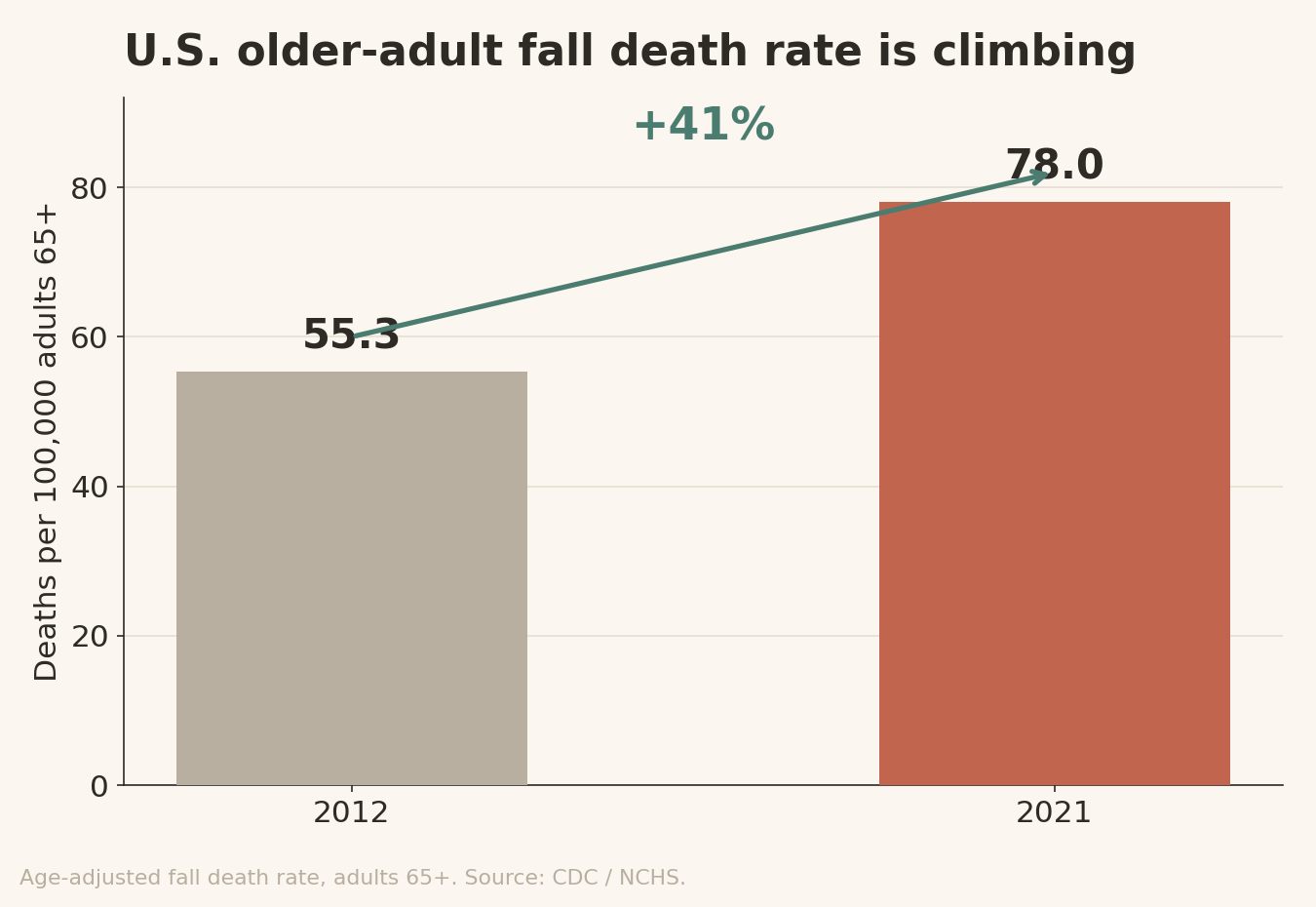
The trend is the part that should get everyone’s attention. The age-adjusted fall death rate among older adults rose about 41% between 2012 and 2021. In 2024, more than 43,000 Americans 65 and older died from a fall. Over the past decade, fall deaths in this group climbed more than 50%, while fall deaths among people under 65 rose only single digits. The financial side tracks the same direction: health-care spending on non-fatal falls among older adults ran roughly $80 billion in 2022, and projections put the total annual cost past $100 billion by 2030.
None of that is inevitable. Researchers who study this are emphatic on the point: falls are not a fixed tax on aging. Most of the big risk factors, including poor strength and balance, are the kind you can change.
The 10-second test worth doing today
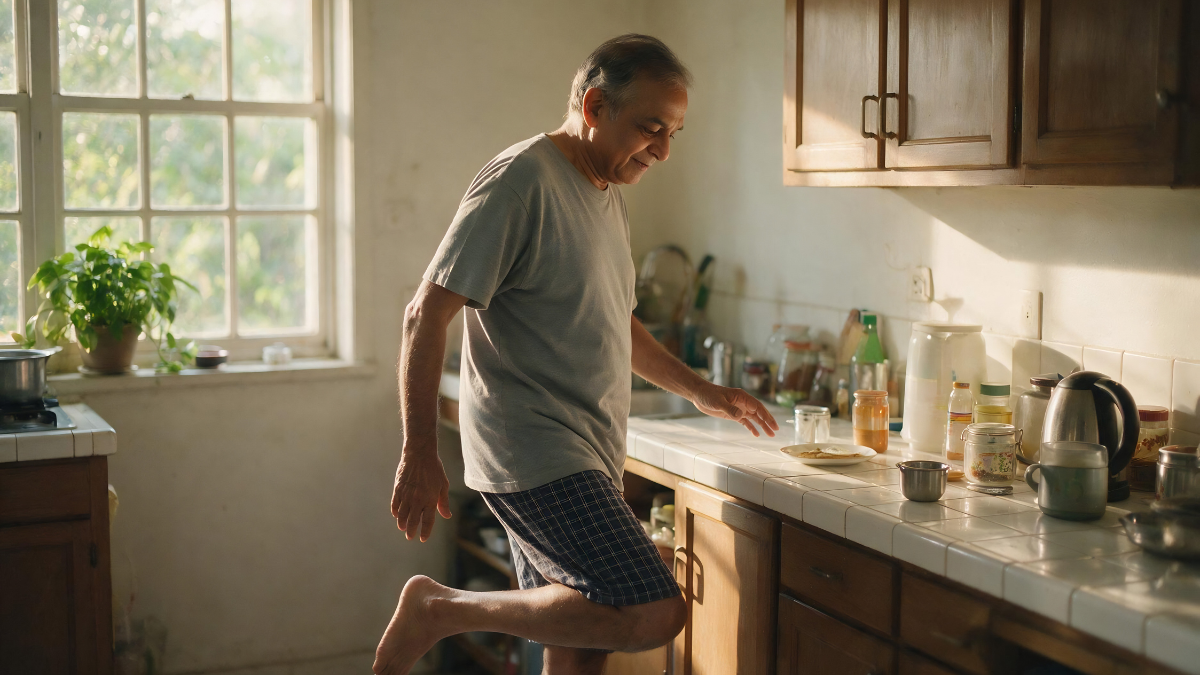
In 2022, researchers publishing in the British Journal of Sports Medicine followed 1,702 adults aged 51 to 75 for a median of about seven years. Each was asked to stand on one leg, unsupported, for 10 seconds. The result was striking: people who couldn’t do it had an 84% higher risk of dying from any cause over the follow-up period, close to double. Among those who failed, 17.5% died during the study, compared with 4.6% of those who passed.
Two honest caveats. This was an observational study, so it shows association, not cause. The test isn’t killing anyone; it’s flagging overall neuromuscular health. And the participants were all white Brazilians, so the exact numbers may not transfer perfectly to everyone. Still, the researchers argued the test is safe, takes under two minutes, and deserves a spot in routine checkups.
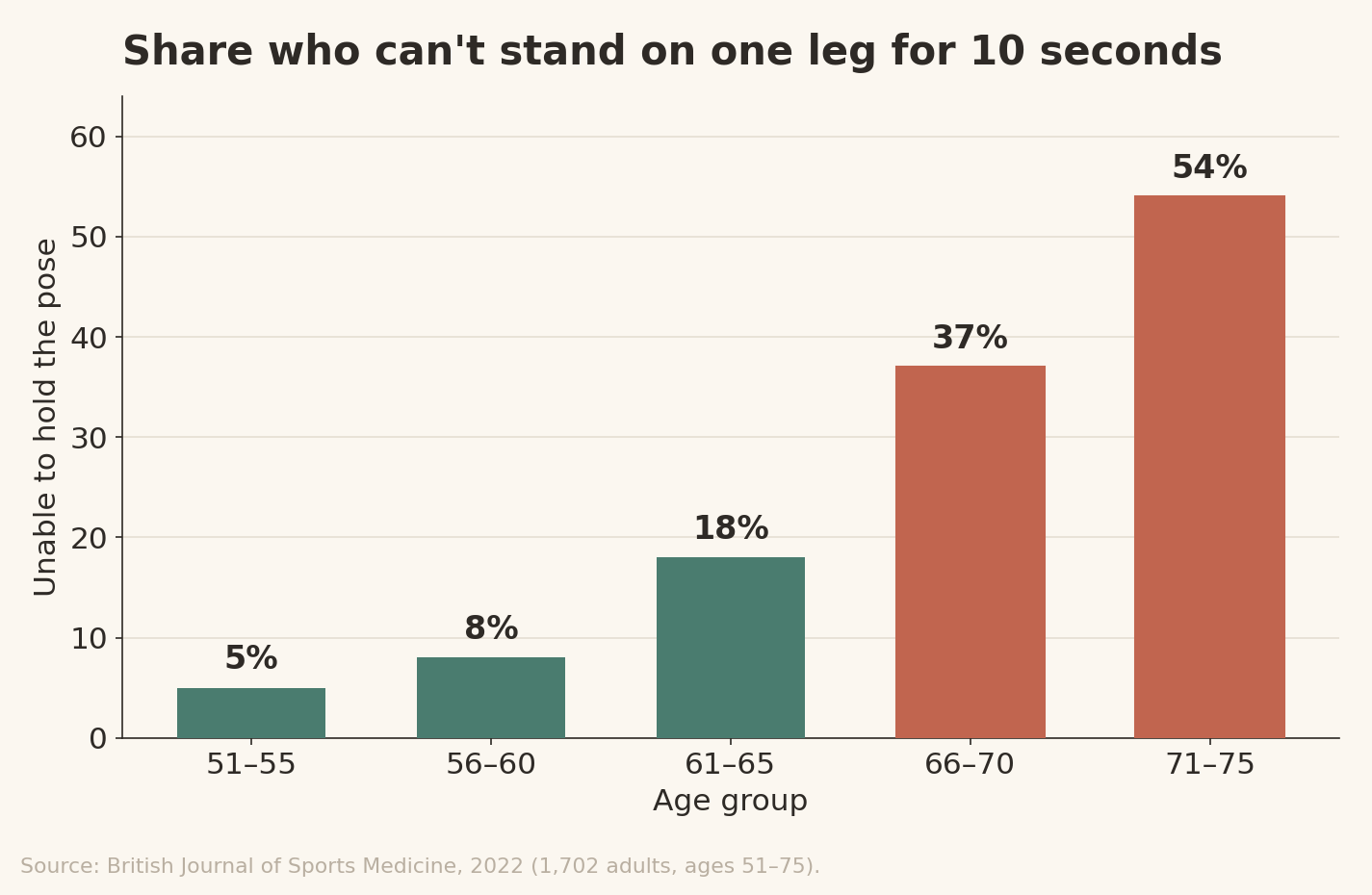
The share of people who can’t hold the pose climbs steeply with age. In the study, roughly 5% of 51-to-55-year-olds failed, versus about 18% at 61–65, 37% at 66–70, and over half of those aged 71–75. If you try it at home, stand near a counter, keep a hand hovering, and treat a wobble not as a verdict but as a starting line.
What the evidence says actually works
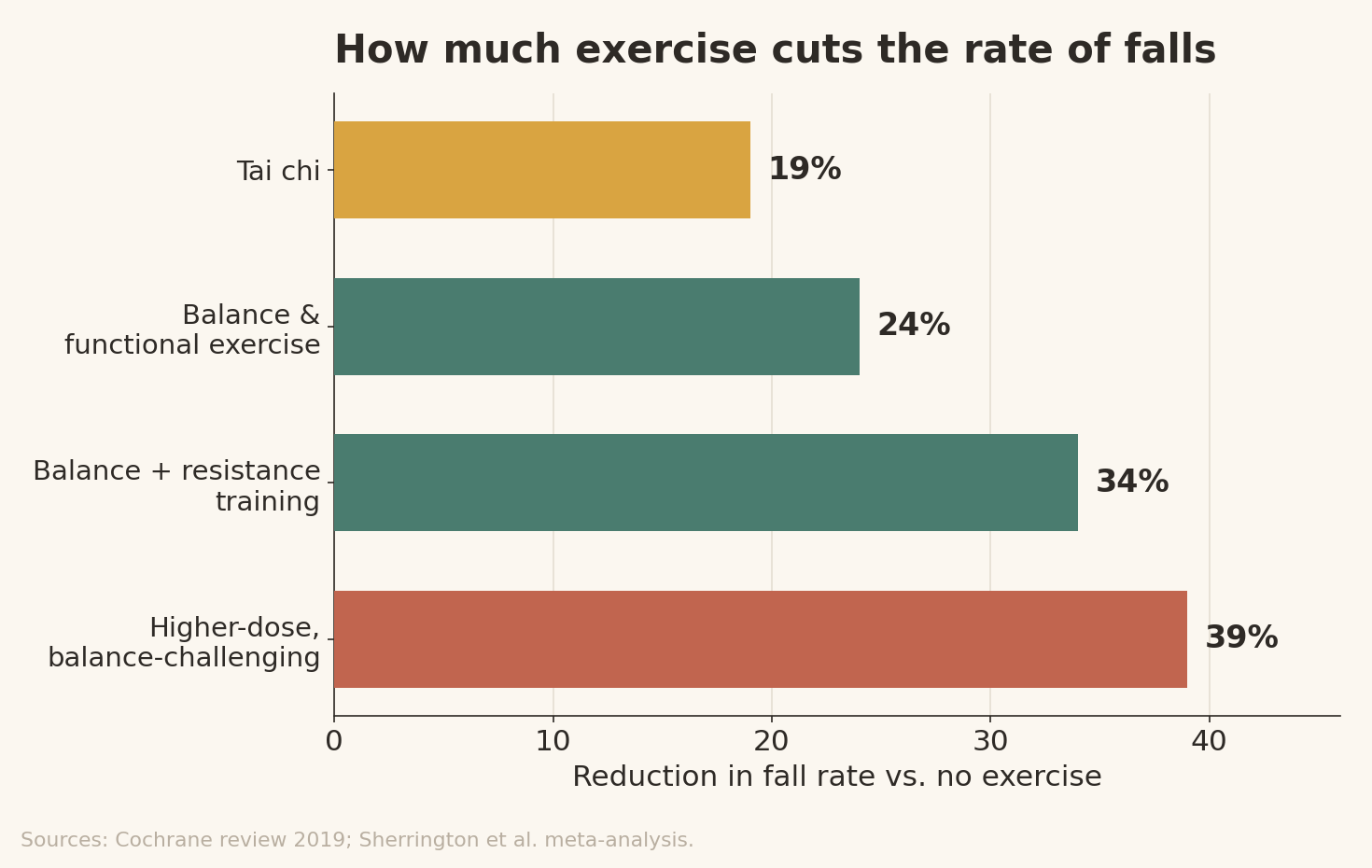
The good news is that the fix is well studied and unglamorous. A 2019 Cochrane review, the gold standard for pooling trial data, found that exercise cuts the rate of falls by roughly a quarter overall. Break it down by type and the picture sharpens: balance and functional exercises reduced the fall rate by about 24% on high-certainty evidence, and programs combining balance work with resistance training brought it down around 34%. Tai chi came in near 19%.
Dose matters. An earlier meta-analysis found the biggest effects, close to a 39% reduction, came from programs that genuinely challenged balance and added up to more than three hours a week. The theme across all of it is consistent: you have to make balance a little hard for it to improve. Comfortable doesn’t train the system.
Here’s how to translate that into something you’ll actually do.
Stand on one leg while you brush your teeth. Two minutes a side, twice a day, and you’ve logged real balance work without touching your calendar. Hold the sink at first, then let go for a few seconds at a time and build up. This is the exact skill the 10-second test measures.
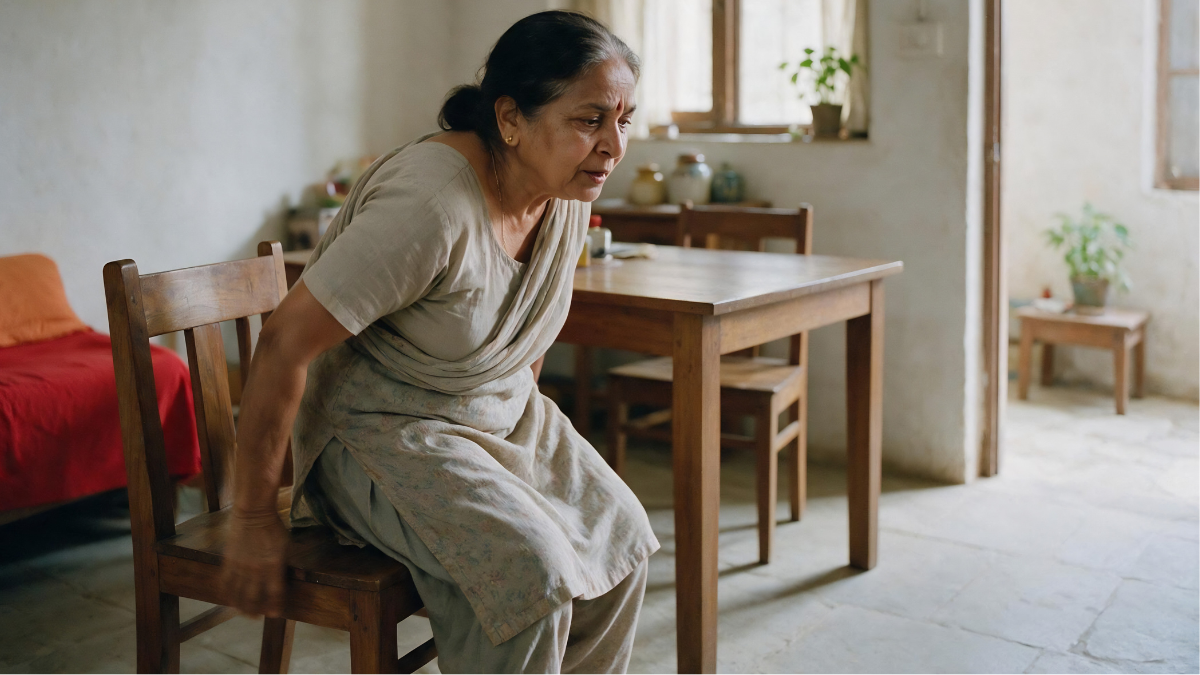
Rise from a chair without using your hands, ten times in a row. This trains the leg strength you rely on to catch yourself, and it doubles as a rough gauge of where you stand. Hard today? It won’t be in a month. Muscle responds to training well into your 80s and beyond. If stiff or sore knees make this one tough, it’s worth sorting out the cause first; our guide to knee pain in the elderly covers what’s usually behind it and what helps.
Walk heel to toe down a hallway, like a tightrope. Ten steps, eyes forward, arms out if it helps. It looks faintly ridiculous and it directly rehearses the narrow-base control that keeps you steady on stairs and curbs.
To hit the dose the research points to, stack a few of these into most days and add gentle resistance work (carrying groceries deliberately, standing squats, resistance bands) a couple of times a week. Under three hours total, spread out, sits right in the effective range. If a standing routine feels like a lot to begin with, a few gentle seated stretches you can do in bed are an easy way to start moving. And because muscle only rebuilds when it has fuel, pair the work with enough protein and solid day-to-day nutrition after 60.
One thing to raise with your doctor
If you’ve had a near-fall, mention it, even if nothing broke. It isn’t an admission that you’re going downhill. Poor balance often traces to something fixable: a medication side effect (sedatives, some blood-pressure and sleep drugs are common culprits), a drop in blood pressure when you stand, an inner-ear problem, or a vision prescription that’s overdue. The CDC’s own fall-prevention framework, STEADI, is built around screening for exactly these and intervening early. A ten-minute conversation can remove a risk factor you didn’t know you had.
Give it a few weeks
Balance rebuilds quietly. You tend to notice it not as a dramatic win but as an absence, like the shelf you reached without a second thought, the curb you stepped off without looking down. The numbers make a strong case for starting, but the felt version is simpler: more room to move through your own life without bracing for it.
For more on staying strong, steady, and independent after 60, browse the Gen S Life wellness blog, or take the tips with you on the Gen S Life app.

This article is for general information and isn’t a substitute for individual medical advice. If you have a history of falls, dizziness, or a condition that affects balance, check with your doctor before starting new exercises.