
Inside India’s Only Cyber Crime HQ: What Actually Happens When You Report a Scam in Maharashtra
Your WhatsApp stops responding to your usual password. A message arrives saying your bank account was just debited for an amount you didn’t authorize. Someone you’ve never met is threatening to share your photos unless you pay them. In that moment, most people don’t know a single phone number to call they just know something has gone very wrong.
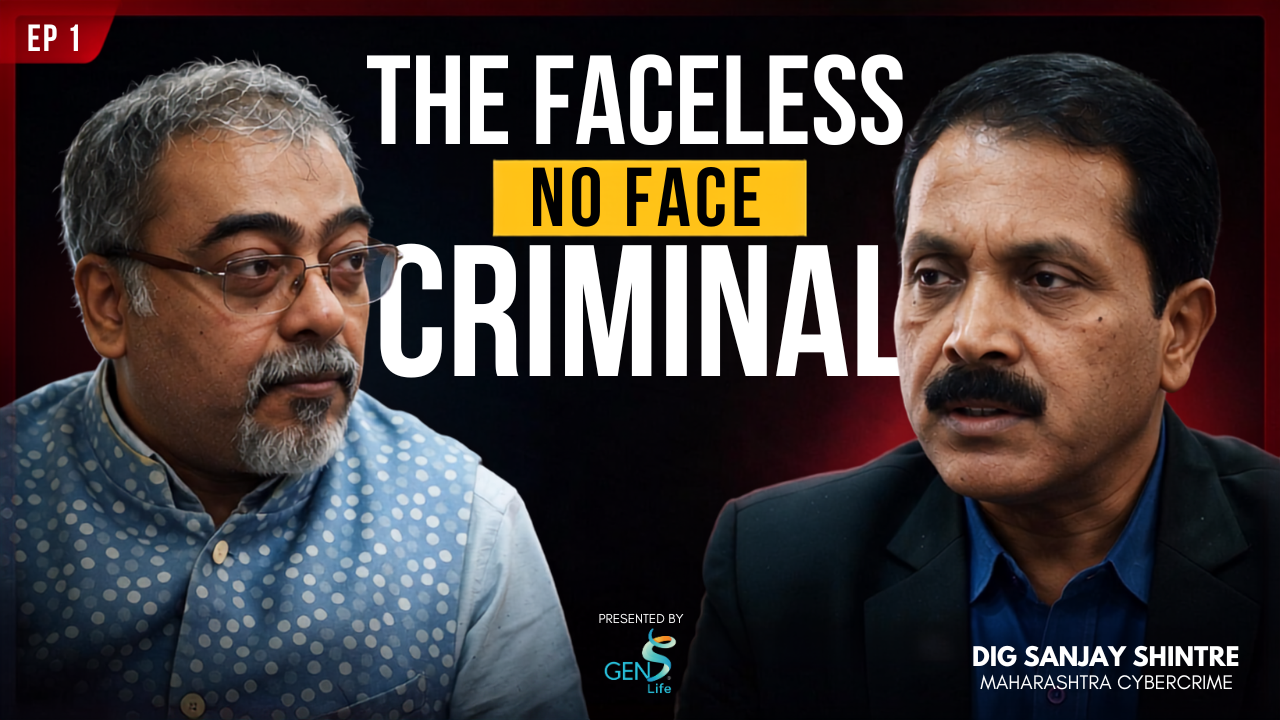
We sat down with Sanjay Shintre, IPS, who has served as DIG of Maharashtra Cyber, for an episode of Gen S Life Tech Talk, to find out what actually happens once you do make that call.
The only office of its kind in India
Maharashtra Cyber’s headquarters sits in Mahape, Navi Mumbai and according to Shintre, it’s the only state-level cybercrime command center of its kind in the country. From there, the department connects to a network of roughly 50 district cyber labs spread across Maharashtra, so a complaint filed in a small town still routes back to the same investigative backbone.
It handles the full spectrum of what people run into online: financial fraud, blackmail, intimidation, and impersonation someone taking over your email, your phone number, your WhatsApp, or your Facebook account and using it against you or the people who trust you.
Who actually answers the phone
The command center is staffed by cyber experts fielding calls in real time. Shintre walked us through a typical scenario: someone clicks a link, downloads what looks like a harmless app, and within minutes their WhatsApp and phone are compromised. They call in, describe what happened, and an operator logs the complaint on the spot.
That’s not the end of it. The moment a complaint is registered, the system sends the victim a confirmation message, the complaint number, and where to go if they want to push the investigation further at their nearest police station. If the victim is elderly, that message goes not just to them but to a family member too, so someone else is looped in from the start.
The number to actually save
If you take one thing from this, make it this: cyber fraud complaints in Maharashtra and across India; go through the 1930 helpline, or online at cybercrime.gov.in. Shintre has said in past interviews that reporting within the first three hours, what he calls the “golden hour,” meaningfully improves the odds of recovering lost money, since that’s the window where banks can still freeze a fraudulent transfer before it moves further down the chain.
Save the number now, not after something happens. The people who call while they’re already frozen with panic are the ones who lose the most time.
Why this matters more than it sounds
It’s easy to think of cybercrime as something that happens to careless people. It doesn’t. It happens to people who are busy, distracted, or trying to help someone. A parent who clicks a link because it looks like it’s from their child, a small business owner who wires money because the request looked exactly like every other invoice they’ve paid that month.
What Maharashtra Cyber is really offering isn’t just a helpline. It’s a working answer to the question everyone quietly has: if this happens to me, who do I actually call, and will anyone do anything about it? Based on what we saw inside the command center, the answer is yes but only if you call.
Watch the full conversation with DIG Sanjay Shintre on GenS Life Tech Talk, where he walks through real cases handled by Maharashtra Cyber and what to do in the first hour after you realize you’ve been targeted.